Why Is the Strategy One-Pager Such a Game Changer for Strategic Alignment?
Petr Havlicek, Alaigned Co-Founder
What you will find in this article
This article explores how a simple Strategy One-Pager can transform strategic alignment in your organization. It covers making strategic choices, effective communication, vertical and horizontal alignment, and the importance of regular strategy reviews — turning complex strategy into a clear, actionable document that drives real execution.
Your strategy exists only if it is known by your people
Engagement surveys often reveal that employees do not understand or are not aligned with their company's strategy. For example, one of our clients recorded an employer net promoter score (eNPS) of below -30% in their annual employee engagement survey. In follow-up focus groups, the top concern expressed was: "We do not know the long-term strategy of our company. We are not even sure that such a strategy exists."
Often, the issue is that the company strategy is either not consolidated effectively (being scattered across various Excel spreadsheets) or is overly complex (such as a 200-page PowerPoint presentation), making it difficult for even senior managers to comprehend.
What comes as a surprise to me: top management teams, who are more frequently exposed to the strategy, often do not realize that regular employees are unaware of or do not fully understand the strategy.
But what value does your strategy have if the very people it targets within your company question its existence?
Bring your strategy to life with the Strategy One-Pager
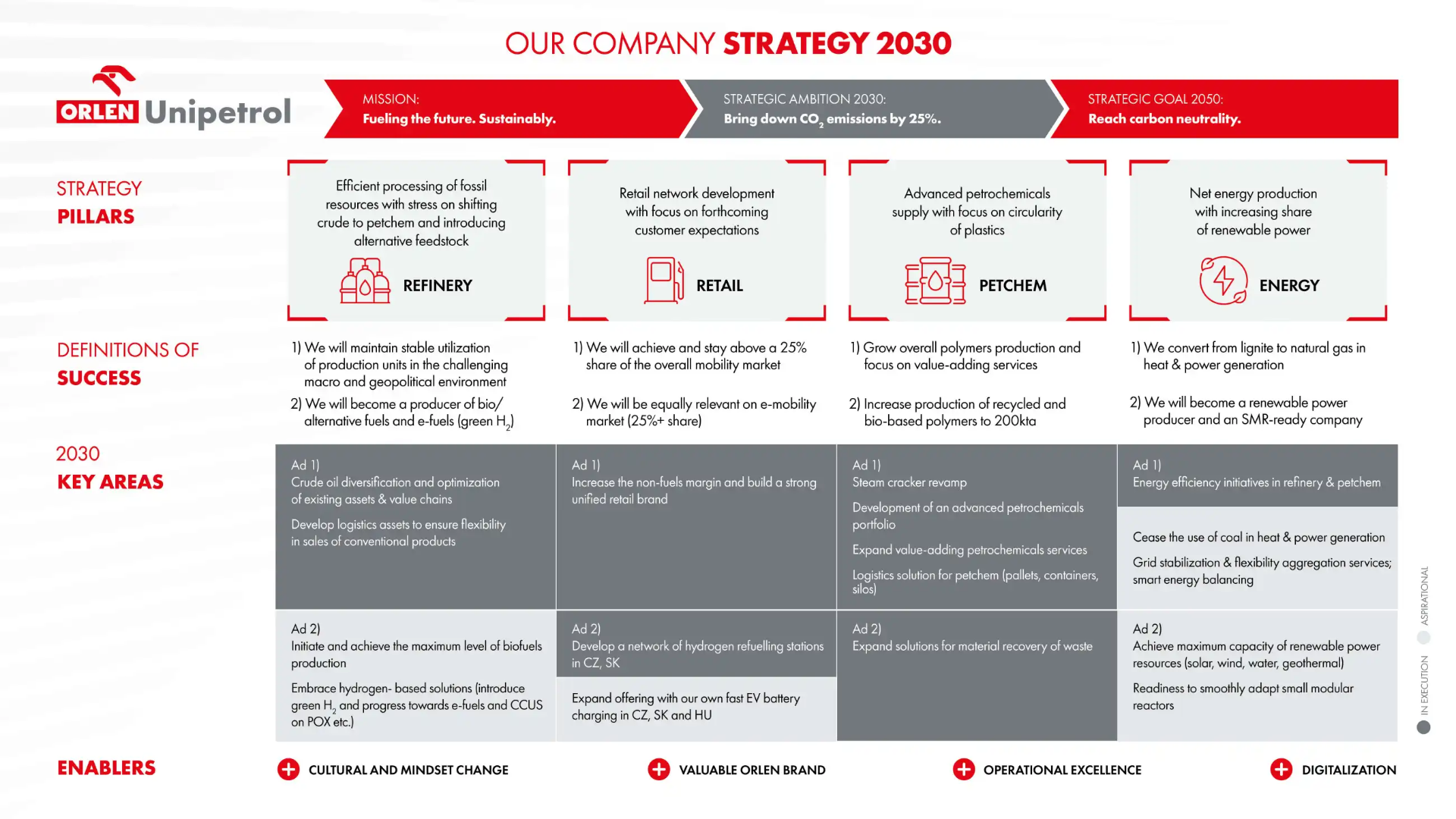
To enhance strategic knowledge and clarity and achieve strategic alignment within your organization, consider using a simple Strategy One-Pager. Although this approach may seem deceptively simple, it can be a true game-changer.
The Strategy One-Pager can support you in meeting key prerequisites for effective alignment within your organization. To be successful, consider the following steps:
1. Make your strategic choices
No matter the complexity of your business, industry, or environment, remember that employees can handle only a limited workload. Rather than increasing the number of priorities, enhance their relevance. Simplify your strategy by making critical strategic choices. Identify and focus on the top priorities that are truly crucial for your business.
2. Communicate your strategy
Effective communication relies on reach and frequency. Use the Strategy One-Pagers to frequently communicate with all relevant personnel. Moreover, ensure that your strategy is readily available and easily accessible. Imagine: if you communicate only four times a year for 30 minutes in all-staff sessions, this makes up to just two hours annually, only 0.1% of your employees' annual capacity, so why expect miracles regarding their knowledge of the strategy?
3. Focus on vertical and horizontal alignment
A One-Pager at the top level provides a general outline of the company's strategic direction. To increase clarity, make sure that your strategy travels down to your teams intact, with the top-level One-Pager providing an anchor to which everyone is linked. Secondly, identify priorities in which two or more teams are involved and get them synchronized on what they need to achieve.
4. Repeat
Top managers often ask me about the frequency and timing of strategy reviews. My advice is simple: revisit the strategy as frequently as possible during management team meetings, using the One-Pagers to guide discussions. Align updates with your business planning cycle. Ideally, you should develop a new strategic outlook annually for the next planning period and update it quarterly during regular business reviews.
How Alaigned can help you
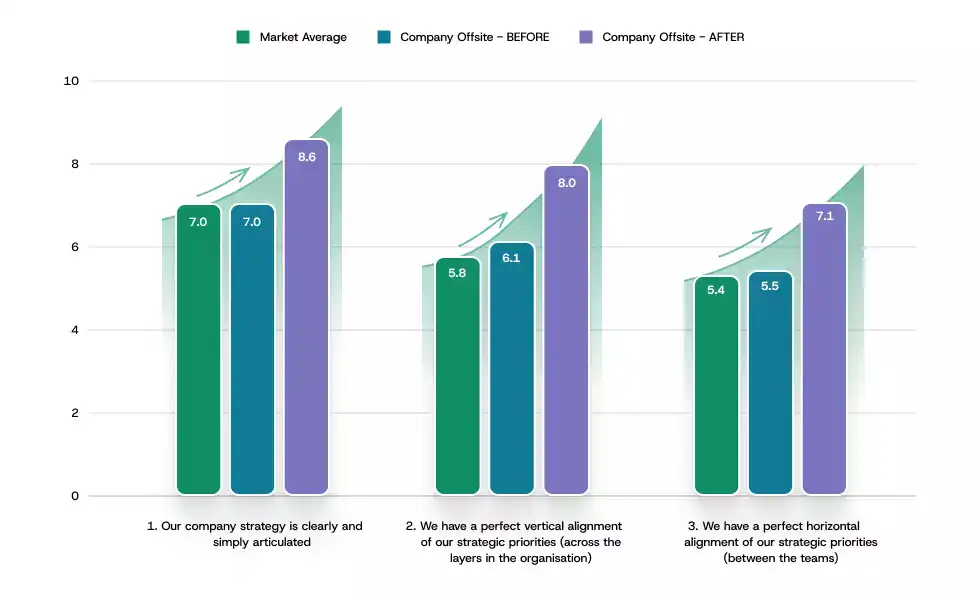
The Alaigned platform is designed to keep strategy intact as it travels down and provides great support in horizontal alignment among teams. The platform will be your guardian of consistency. It strictly defines and applies structural rules so that no strategic "favela" on the lower levels of your organization can surprise you.
Alaigned tracks all potential links between collaborating teams and reports back any misalignment so that you can address it.
